

For any sexually transmitted infection — discharge, burning urination, sores, warts, itching or a positive test — consult an STD/HIV specialist or a venereologist (dermatology and venereology, DVL). They test for several infections together and treat partners. Women can also see a gynaecologist, and men a urologist for some symptoms. For possible HIV exposure in the last 72 hours, seek PEP immediately.
In this article
- STD or STI — is there a difference?
- The right doctor for each situation
- Which doctor to consult for syphilis?
- Which doctor to consult for herpes?
- What happens at an STD consultation
- STD tests: what each one checks
- STDs in women: why many go unnoticed
- STDs in men who have sex with men
- After treatment: preventing reinfection
- Why self-treatment is risky
- Government vs private STD care
- Symptoms that need a doctor this week
- Partner notification without embarrassment
- Getting tested near you
- Frequently asked questions
01STD or STI — is there a difference?
STI (sexually transmitted infection) is the more accurate term, because many infections cause no symptoms and are not yet a "disease". STD is the term most people search. Both refer to infections such as chlamydia, gonorrhoea, syphilis, herpes, HPV (genital warts), trichomoniasis, hepatitis B and HIV. Many people have more than one at a time, which is why a single specialist who tests broadly is the best first step.
02The right doctor for each situation
- Any STD symptom or worry after unprotected sex: STD/HIV specialist or venereologist.
- Women with discharge, pelvic pain or abnormal bleeding: STD specialist or gynaecologist.
- Men with testicular pain or urinary symptoms: STD specialist; urologist if a structural cause is suspected.
- Sores in the mouth or throat after oral sex: STD specialist.
- Possible HIV exposure within 72 hours: any doctor or emergency department for PEP immediately.
- Positive HIV test: HIV specialist.
03Which doctor to consult for syphilis?
Syphilis is diagnosed with blood tests (a screening test such as VDRL/RPR and a confirmatory treponemal test) and treated with injectable or oral antibiotics chosen by stage. An STD specialist or venereologist manages it, including follow-up blood tests at intervals to confirm cure and testing of partners. Pregnant women need urgent treatment to protect the baby. Our syphilis treatment guide covers stages and tests in detail.
04Which doctor to consult for herpes?
Genital herpes causes painful blisters or ulcers that come and go. An STD specialist or dermatologist confirms it (ideally with a swab test from a fresh sore) and prescribes antiviral medicines that shorten outbreaks and reduce transmission. People with frequent outbreaks may take daily suppressive therapy. See how common herpes is in India and our herpes treatment guide.
05What happens at an STD consultation
- A private discussion of symptoms, timing of exposure and partners — no judgement.
- An examination only if needed and only with consent.
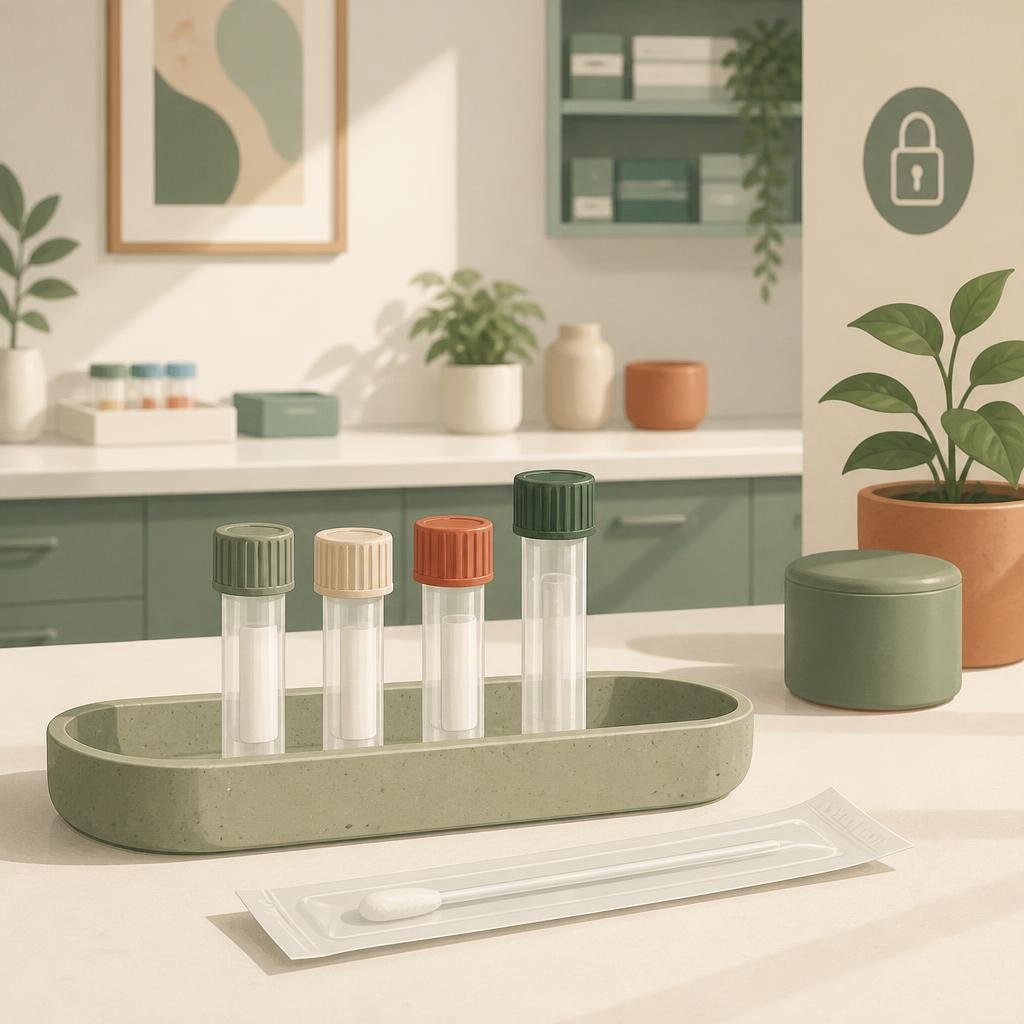
- Tests chosen by symptoms and timing: urine or swab NAAT for chlamydia and gonorrhoea, blood tests for syphilis, HIV and hepatitis B/C, swabs for sores.
- Treatment — many bacterial STDs are cured with a short antibiotic course.
- Advice on partner treatment, abstinence period and re-testing.
06STD tests: what each one checks
- Urine NAAT or swab: chlamydia and gonorrhoea — the most accurate tests, from about 1–2 weeks after exposure.
- VDRL/RPR plus TPHA or treponemal test: syphilis, reliable from about 6 weeks, with a repeat at 12 weeks if needed.
- HIV 4th-generation test: from about 6 weeks, with a final check at 3 months; RNA tests detect earlier.
- Hepatitis B surface antigen and hepatitis C antibody.
- Swab PCR from a sore: herpes or syphilis, best done when the sore is fresh.
- Vaginal swab: trichomoniasis and bacterial vaginosis in women.
Your doctor picks the combination based on symptoms and timing, so you don't pay for tests that cannot yet give an answer.
07STDs in women: why many go unnoticed
Chlamydia and gonorrhoea often cause no symptoms in women, or only mild discharge or spotting. Left untreated, they can spread to the uterus and tubes, causing pelvic inflammatory disease, chronic pain, ectopic pregnancy and infertility. Women with new partners should consider regular screening even without symptoms. A female doctor is available at our clinic on request.
08STDs in men who have sex with men
Men who have sex with men benefit from testing at three sites — urine, throat and rectal swabs — because throat and rectal infections are often missed by urine tests alone. Regular three-to-six-monthly testing, hepatitis A and B and HPV vaccination, and discussing PrEP are part of good care. Our clinics welcome LGBTQ+ patients and keep all discussions confidential.
09After treatment: preventing reinfection
Reinfection is common when a partner is not treated. Complete the full course, avoid sex for the advised period (often seven days after single-dose treatment, or until symptoms resolve), make sure partners are treated, and re-test when advised — commonly after three months for chlamydia and gonorrhoea. Use condoms consistently and consider vaccination for hepatitis B and HPV.
10Why self-treatment is risky
Taking leftover or chemist-recommended antibiotics can partially treat an infection, hide symptoms and allow complications such as pelvic inflammatory disease, infertility or spread to partners. Gonorrhoea in particular has growing antibiotic resistance, so the correct medicine and dose matter. Some sores that look minor are syphilis or herpes and need specific tests.
11Government vs private STD care
Government hospitals run STI/RTI clinics (often called "Suraksha clinics") that offer free testing and treatment, but they can be crowded and you may worry about being seen. Private STD specialists offer privacy, faster tests and continuity. Dr. Monga Medi Clinic provides confidential STD treatment in Delhi NCR — see area pages such as STD treatment in Delhi — and online consultation across India.
12Symptoms that need a doctor this week
- Burning urination or discharge from the penis or vagina.
- Any sore, blister or ulcer on the genitals, anus or mouth.
- Warts or lumps in the genital area.
- Pain in the testicles or lower abdomen.
- A rash on palms and soles, or swollen glands after a risk.
13Partner notification without embarrassment
If you are diagnosed with an STI, recent partners may need testing or treatment even if they feel well. Your doctor can help you decide what to say, or provide a note for the partner's doctor. Avoid sex until you and your partner have completed treatment and any advised waiting period.
14Getting tested near you
For in-person testing in Delhi NCR, visit our clinics at Lajpat Nagar 4, Dwarka Sector 9 or DLF Phase 4 Gurugram. Near the airport? See our sexual health clinic near Delhi Airport area. For HIV prevention information across India, visit peptreatmentforhiv.com. Our guide where to get an STD and HIV test explains window periods.
?What people also search
Real questions patients type into Google about this topic. Each opens our detailed treatment page.
FAQFrequently asked questions
Which doctor is best for STD?
An STD/HIV specialist or venereologist (DVL). They test for multiple infections and treat partners.
Should women see a gynaecologist for STD?
A gynaecologist can help, especially for pelvic symptoms. An STD specialist is equally appropriate and tests more broadly.
Which doctor to consult for syphilis?
An STD specialist or venereologist, who diagnoses with blood tests, treats by stage and arranges follow-up testing.
Can STDs be cured?
Bacterial STDs like chlamydia, gonorrhoea and syphilis are curable with correct antibiotics. Viral ones like herpes and HIV are controlled with medicines.
Is STD testing confidential?
Yes. Results are shared only with you. Online consultation is available for added privacy.
How much does an STD consultation cost?
HIV & STD consultation at Dr. Monga Medi Clinic is ₹2,000; tests are charged separately based on what is needed.
How soon after sex can I get an STD test?
Chlamydia and gonorrhoea tests are reliable from about 1–2 weeks, syphilis from about 6 weeks, and HIV 4th-generation tests from about 6 weeks with a final check at 3 months.
iMedical sources
- WHO: Sexually transmitted infections
- NHS: Sexually transmitted infections
- CDC: STI treatment guidelines
External links are for further reading and do not replace advice from a qualified health professional.
This guide is general health information, not a diagnosis or personal treatment plan. For emergencies, go to the nearest hospital.
 Sexual health
 HIV & STD
 HIV & STD