
The commonest STD signs are unusual discharge, burning while passing urine, sores or blisters, warts, itching, pain during sex and lower abdominal or testicular pain. But many STDs cause no symptoms at all, and several non-sexual conditions cause similar signs. You cannot tell by looking — only testing can confirm whether it is an STD. If you had a risk, get tested even if you feel fine.
In this article
- Common STD symptoms in men
- Common STD symptoms in women
- Symptoms by infection
- Look-alikes: when it is probably not an STD
- Symptoms in the mouth, throat and anus
- What an STD sore looks like
- Can stress or friction cause STD-like symptoms?
- STD symptoms during pregnancy
- No symptoms does not mean no STD
- When to get tested
- What to do while you wait
- Getting tested privately
- Frequently asked questions
01Common STD symptoms in men
- Burning or pain when urinating.
- White, yellow or green discharge from the penis.
- Sores, ulcers, blisters or warts on the penis, scrotum, anus or mouth.
- Itching or irritation inside the penis.
- Pain or swelling in one or both testicles.
- Rash on the body, palms or soles (possible secondary syphilis).
02Common STD symptoms in women
- Change in vaginal discharge — colour, smell or amount.
- Burning while passing urine.
- Itching or soreness of the vulva.
- Pain during sex or deep pelvic pain.
- Bleeding between periods or after sex.
- Sores, blisters or warts on the genitals, anus or mouth.
03Symptoms by infection
- Chlamydia and gonorrhoea: discharge, burning urination, pelvic or testicular pain — or no symptoms.
- Syphilis: a painless sore at first, later a rash including palms and soles, swollen glands.
- Herpes: painful clusters of blisters that burst into ulcers, sometimes with fever.
- HPV: painless flesh-coloured warts; most infections have no symptoms.
- Trichomoniasis: frothy, smelly discharge and itching in women; often silent in men.
- HIV: flu-like illness 2–4 weeks after infection, or no symptoms for years.
04Look-alikes: when it is probably not an STD
- Urinary tract infection — burning and frequent urination, common in women; see UTI symptoms.
- Yeast infection — itching with thick white discharge.
- Bacterial vaginosis — thin grey discharge with a fishy smell.
- Jock itch — itchy red rash in the groin folds; see jock itch treatment.
- Pearly penile papules or Fordyce spots — harmless normal bumps.
- Friction or allergy from condoms, soaps or shaving.
Because the overlap is large, a test is the only reliable way to know.
05Symptoms in the mouth, throat and anus
STDs are not limited to the genitals. After oral sex, gonorrhoea and chlamydia can infect the throat, usually without symptoms or with a mild sore throat. Syphilis and herpes can cause mouth sores. After anal sex, infections may cause anal discharge, pain, itching, bleeding or a feeling of needing to pass stool — or no symptoms at all. Tell the doctor which types of sex you had, so the right sites are tested; a urine test alone can miss throat and rectal infections.
06What an STD sore looks like
Syphilis usually starts as a single, firm, painless ulcer with a clean base that heals by itself in three to six weeks — while the infection continues. Herpes causes clusters of small painful blisters that break into shallow ulcers and crust over. Chancroid causes painful, ragged ulcers with tender glands. Genital warts are soft, flesh-coloured bumps, sometimes in clusters. Because these overlap with harmless conditions and with each other, photographs online are not reliable — a swab or blood test is.
07Can stress or friction cause STD-like symptoms?
Yes. Vigorous sex, shaving, tight clothing, latex allergy and some soaps cause redness, tiny cuts or itching that worry people after a risky encounter. Anxiety also makes people notice normal structures for the first time. These settle in a few days. A test gives peace of mind, and doctors are used to reassuring patients when results are negative.
08STD symptoms during pregnancy
STDs in pregnancy can affect the baby. Syphilis can cross the placenta, and chlamydia, gonorrhoea and herpes can affect the baby at birth. Antenatal screening includes syphilis, HIV and hepatitis B. Pregnant women with any genital symptom or new partner should tell their obstetrician promptly — most infections can be treated safely in pregnancy.
09No symptoms does not mean no STD
Up to 7 in 10 women and half of men with chlamydia have no symptoms. Early syphilis sores are painless and may be hidden. HIV can be silent for years. That is why doctors recommend testing after any unprotected sex with a new partner, when a partner has symptoms or a diagnosis, and regularly for people with multiple partners.
10When to get tested
- Now: if you have symptoms, or a partner has been diagnosed.
- Within 72 hours: if there was a possible HIV exposure — for PEP, not just testing.
- From 1–2 weeks: chlamydia and gonorrhoea tests become reliable.
- From about 6 weeks, final at 3 months: syphilis and HIV tests.
Our STD and HIV testing guide explains window periods in detail.
11What to do while you wait
Avoid sex, or use condoms, until you have results. Don't squeeze, pick or apply creams to sores before a doctor sees them — it can make testing harder. Write down when symptoms started and any recent partners. If you have fever, severe pain or a rash spreading quickly, see a doctor the same day.
12Getting tested privately
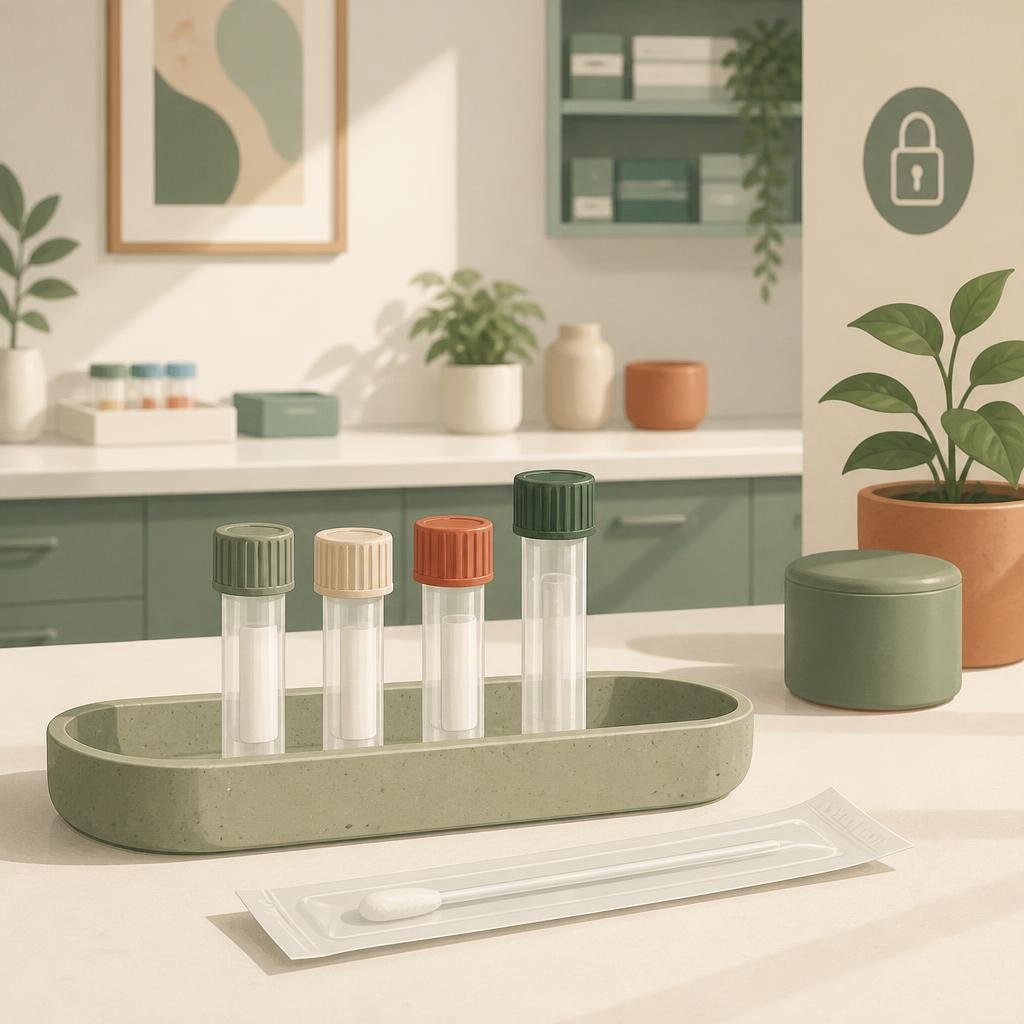
Dr. Monga Medi Clinic offers confidential STD testing and treatment in Delhi NCR — including STD treatment in Gurgaon — and online. For HIV prevention across India see peptreatmentforhiv.com.
?What people also search
Real questions patients type into Google about this topic. Each opens our detailed treatment page.
FAQFrequently asked questions
How do I know if I have an STD?
Only testing can confirm it. Symptoms such as discharge, burning, sores or itching are clues, but many STDs have no symptoms.
How soon do STD symptoms appear?
From a few days (gonorrhoea, herpes) to weeks (chlamydia, syphilis) or not at all. Timing varies by infection.
Can burning urine be an STD?
Yes, it can be chlamydia, gonorrhoea or trichomoniasis — or a urinary tract infection. A urine test tells them apart.
Are all genital bumps STDs?
No. Pearly papules, Fordyce spots, ingrown hairs and folliculitis are common and harmless, but get any new bump checked.
Should I get tested if I have no symptoms?
Yes, after unprotected sex with a new partner or if a partner is diagnosed.
Where can I get tested confidentially?
At Dr. Monga Medi Clinic in Delhi NCR or online. WhatsApp +91 70424 24269.
Can an STD cause a sore throat?
Yes. Gonorrhoea and chlamydia can infect the throat after oral sex, often without symptoms. A throat swab is needed to detect it.
Can STD symptoms come and go?
Yes. Herpes outbreaks come and go, and syphilis sores heal on their own while the infection remains. Disappearing symptoms do not mean the infection has gone.
Can I have an STD without having intercourse?
Yes. Herpes, HPV and syphilis can spread through skin contact and oral sex, and several infections spread through anal or oral sex.
Can I get an STD from a toilet seat?
This is extremely unlikely. STDs spread through sexual contact, skin-to-skin contact during sex, blood and from mother to baby, not through toilet seats or shared towels in normal use.
Do STDs show in a routine blood test?
No. Routine blood tests do not check for STDs. You need specific tests chosen for the infections you may have been exposed to.
iMedical sources
External links are for further reading and do not replace advice from a qualified health professional.
This guide is general health information, not a diagnosis or personal treatment plan. For emergencies, go to the nearest hospital.
 HIV & STD
 HIV & STD
 Sexual health