
Quick answer
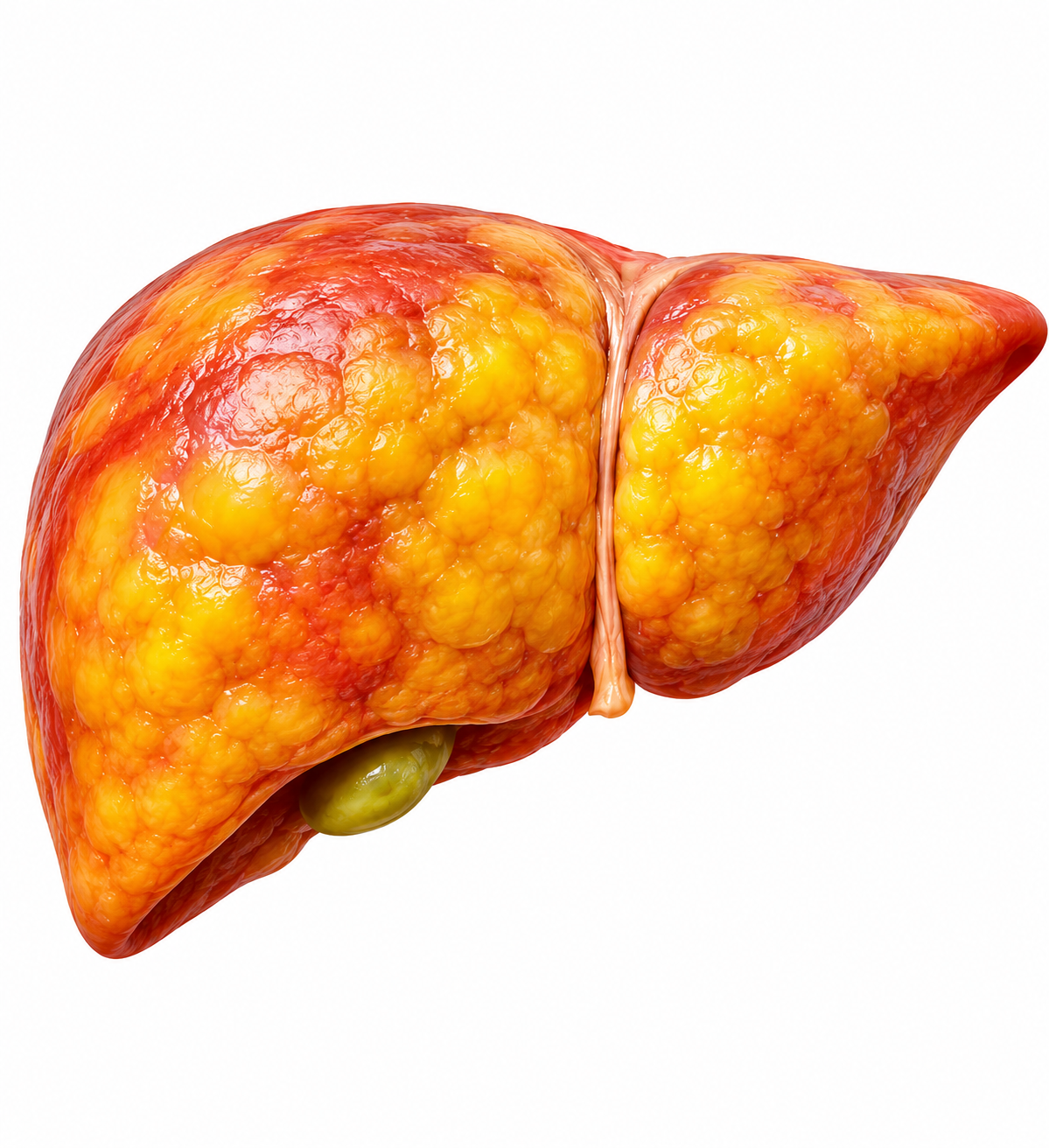
Fatty liver grade 2 is moderate fat build-up seen on ultrasound. The liver looks clearly brighter, and its vessels and the diaphragm are slightly harder to see. Most people have no symptoms, or only tiredness and a dull ache on the right side. It isn't an emergency. But because inflammation or scarring may have started, a FIB-4 score and, if needed, a FibroScan are advised. In most people it can be reversed with 7–10% weight loss, WHO-level activity, a low-sugar Indian diet and no alcohol.
Key takeaways
- Grade 2 = moderate fatty liver, the middle of three ultrasound grades.
- Symptoms are usually absent or mild, so how you feel is not a guide to how your liver is doing.
- The real danger is scarring (fibrosis), which an ultrasound can't measure. Get a FIB-4 score.
- The diet chart below follows WHO limits: free sugar under 10% of calories (ideally 5%), salt under 5 g, at least 400 g of fruit and vegetables.
- Grade 2 is usually curable with 7–10% weight loss over 6–12 months.
01What is fatty liver grade 2?
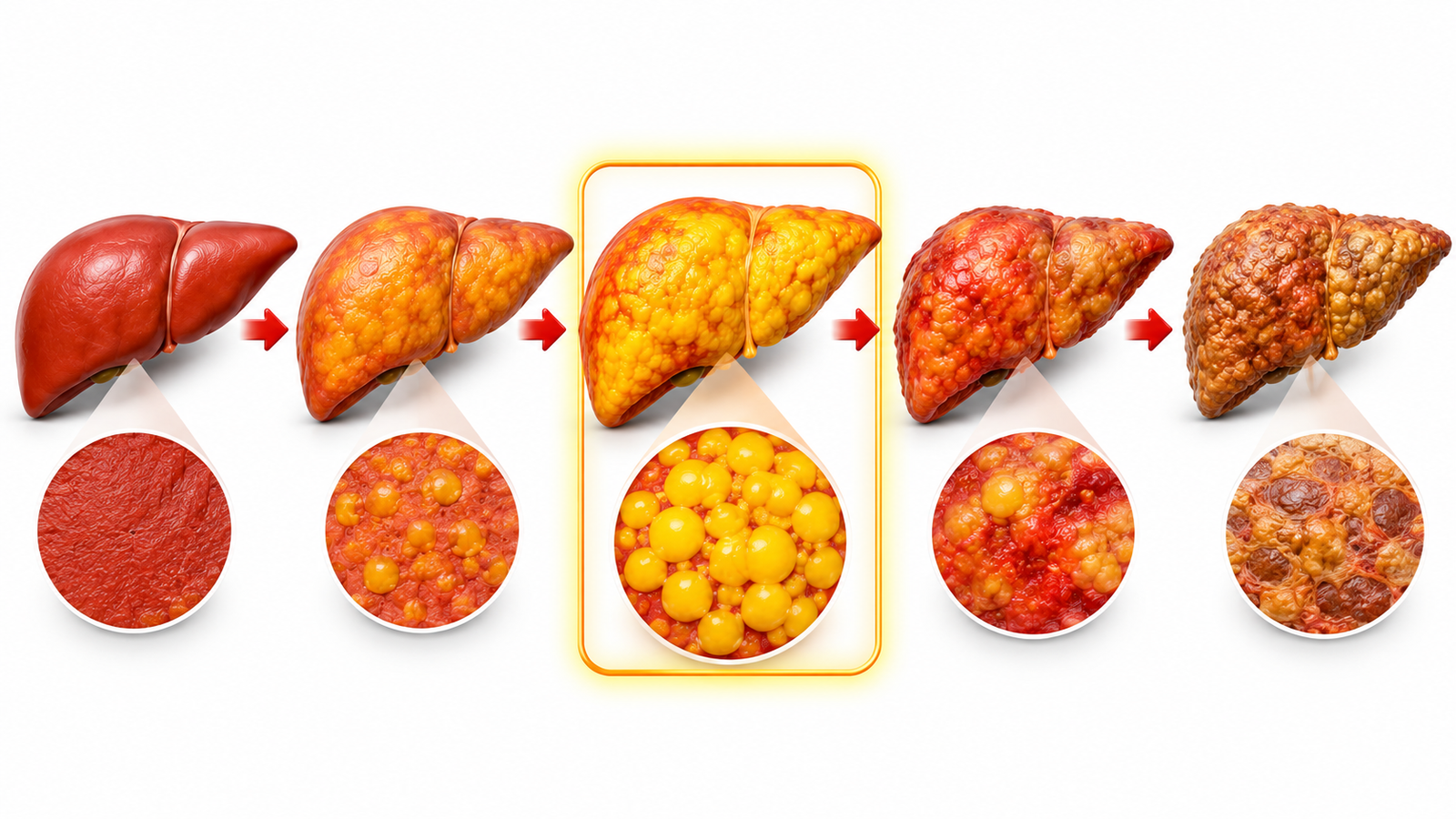
Short answerFatty liver grade 2 is moderate hepatic steatosis. On ultrasound the liver looks markedly brighter than normal, and the walls of its blood vessels and the diaphragm are slightly harder to see. It means more fat than grade 1, but not as much as grade 3.
Radiologists grade fatty liver by comparing the liver's brightness (echogenicity) with nearby organs and by how clearly they can see structures inside and behind it. At grade 2, the fine echoes are moderately increased. The edges of the vessels inside the liver start to blur, though the diaphragm is usually still visible. Many reports also say “grade II fatty infiltration” or “moderate fatty liver”.
If you have had a FibroScan, the fat is measured in numbers instead: a CAP of about 249–280 dB/m usually corresponds to moderate (S2) fat. Most people with grade 2 also have at least one metabolic risk factor, so doctors often classify it as MASLD — the current name for fatty liver linked to weight, sugar, cholesterol or blood pressure.
02Fatty liver grade 2 symptoms
Short answerMost people with fatty liver grade 2 have no symptoms. When symptoms appear they are mild: tiredness, a general feeling of being unwell, and a dull heaviness under the right ribs. Yellow eyes, a swollen belly or vomiting blood are not grade 2 symptoms and need urgent care.
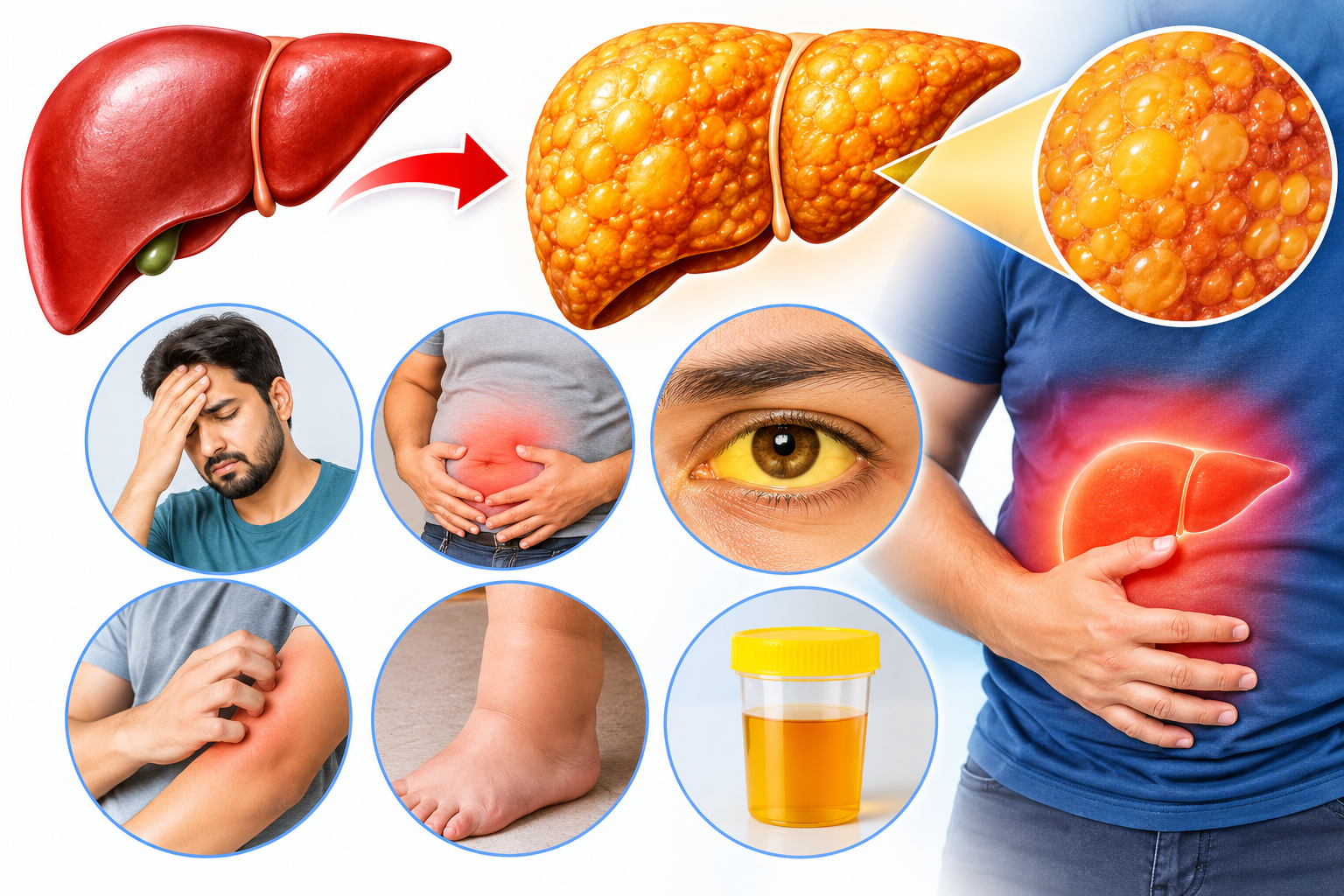
The liver has few pain nerves inside it, so extra fat rarely hurts. Discomfort, when present, comes from the liver enlarging and stretching its outer covering. Other clues that often come with grade 2 — rather than from it — include:
- Dark, velvety skin on the neck or armpits (acanthosis nigricans), a sign of insulin resistance
- Weight gain around the waist, even if the rest of the body is slim
- Bloating and acidity, which are common but not specific to fatty liver
- Raised ALT/AST found on a routine blood test
The key message: feeling fine does not mean the liver is fine. Even more advanced liver disease can stay silent for years, which is why tests matter more than symptoms.
03Is grade 2 fatty liver dangerous?
Short answerGrade 2 fatty liver is not immediately dangerous, but it is a warning that should not be ignored. The fat itself is less of a concern than whether inflammation or scarring (fibrosis) has begun — and that can only be found with tests such as FIB-4 and FibroScan.
International guidelines (EASL–EASD–EASO, 2024) note that the amount of fat on its own is not what predicts serious liver problems. What predicts them is the stage of fibrosis and liver enzymes that stay high. Grade 2 matters because it is more often found alongside the conditions that push fibrosis forward:
Liver risks
- Inflammation (MASH)
- Scarring that can, over many years, lead to cirrhosis
- Liver cancer in a small number with advanced scarring
Whole-body risks
- Type 2 diabetes
- Heart attack and stroke — the most common serious outcome
- Chronic kidney disease
So the honest answer is: grade 2 is dangerous if left unchecked, and very manageable if checked and treated early.
Grade 2 on your report? Get a scarring check with Dr. Monga Medi Clinic.
Diabetes & metabolic consultation at ₹800 — clinics in Lajpat Nagar 4, Dwarka Sector 9 and DLF Phase 4 Gurugram, plus online consultations across India, Monday to Sunday, 10 am to 8 pm.
Consultation fee only; tests and medicines, if needed, are extra.
04Grade 1 vs grade 2 vs grade 3: what changes
Short answerAll three grades describe fat in the liver. As the grade rises, more fat is present and the case for checking scarring, controlling diabetes and losing more weight becomes stronger. The grade alone does not show liver damage.
| Grade 1 (mild) | Grade 2 (moderate) | Grade 3 (severe) | |
|---|---|---|---|
| Ultrasound | Slightly brighter; vessels and diaphragm clear | Markedly brighter; vessels and diaphragm slightly blurred | Very bright; back of liver and diaphragm poorly seen |
| Scarring check | FIB-4 if risk factors are present | FIB-4 advised; FibroScan if not low | FIB-4 and FibroScan strongly advised |
| Weight-loss target | 5% if overweight | 7–10% | 10% or more, with supervision |
| Typical review | 3–6 months | 3 months, then 6 and 12 | Specialist-led schedule |
If your earlier report showed grade 1, read our guide to grade 1 fatty liver. Moving from grade 1 to grade 2 is a sign that the current routine isn't working.
05Self-check: do you need a scarring test?
Short answerTick the statements that apply. With two or more ticks, a doctor-ordered FIB-4 score — and possibly a FibroScan — should come before relying on diet alone. This tool is a guide, not a diagnosis.
Ticked 2 or more? Book your FIB-4 and liver review.
Diabetes & metabolic consultation at ₹800 — clinics in Lajpat Nagar 4, Dwarka Sector 9 and DLF Phase 4 Gurugram, plus online consultations across India, Monday to Sunday, 10 am to 8 pm.
Consultation fee only; tests and medicines, if needed, are extra.
06Tests for fatty liver grade 2
Short answerFor fatty liver grade 2, the essential tests are LFT, HbA1c, lipid profile and platelet count, used to calculate a FIB-4 score. A FIB-4 below 1.3 means low risk of advanced scarring. Higher scores need a FibroScan to measure liver stiffness.
| Result | Low risk | In-between | High risk |
|---|---|---|---|
| FIB-4 score | Below 1.3 (below 2.0 if 65+) | 1.3–2.67 | Above 2.67 |
| FibroScan stiffness (LSM) | Below 8 kPa | 8–12 kPa | Above 12 kPa |
| What happens next | Lifestyle plan, re-check in 1–3 years | FibroScan / closer follow-up | Liver specialist care |
Also useful: TSH, hepatitis B and C tests, and a kidney function test if you have diabetes or high blood pressure. Samples for all of these can be given at the clinic's in-house diagnostics desk, and your FIB-4 score is worked out from the results during your review.
07Diet chart for fatty liver grade 2
Short answerA good diet chart for fatty liver grade 2 is built on WHO healthy-diet limits. Keep free sugar under 10% of calories (ideally under 6 teaspoons a day), salt under 5 g, and eat at least 400 g of fruit and vegetables. Choose whole grains, dal and lean protein, and avoid alcohol, sugary drinks, maida and fried snacks.
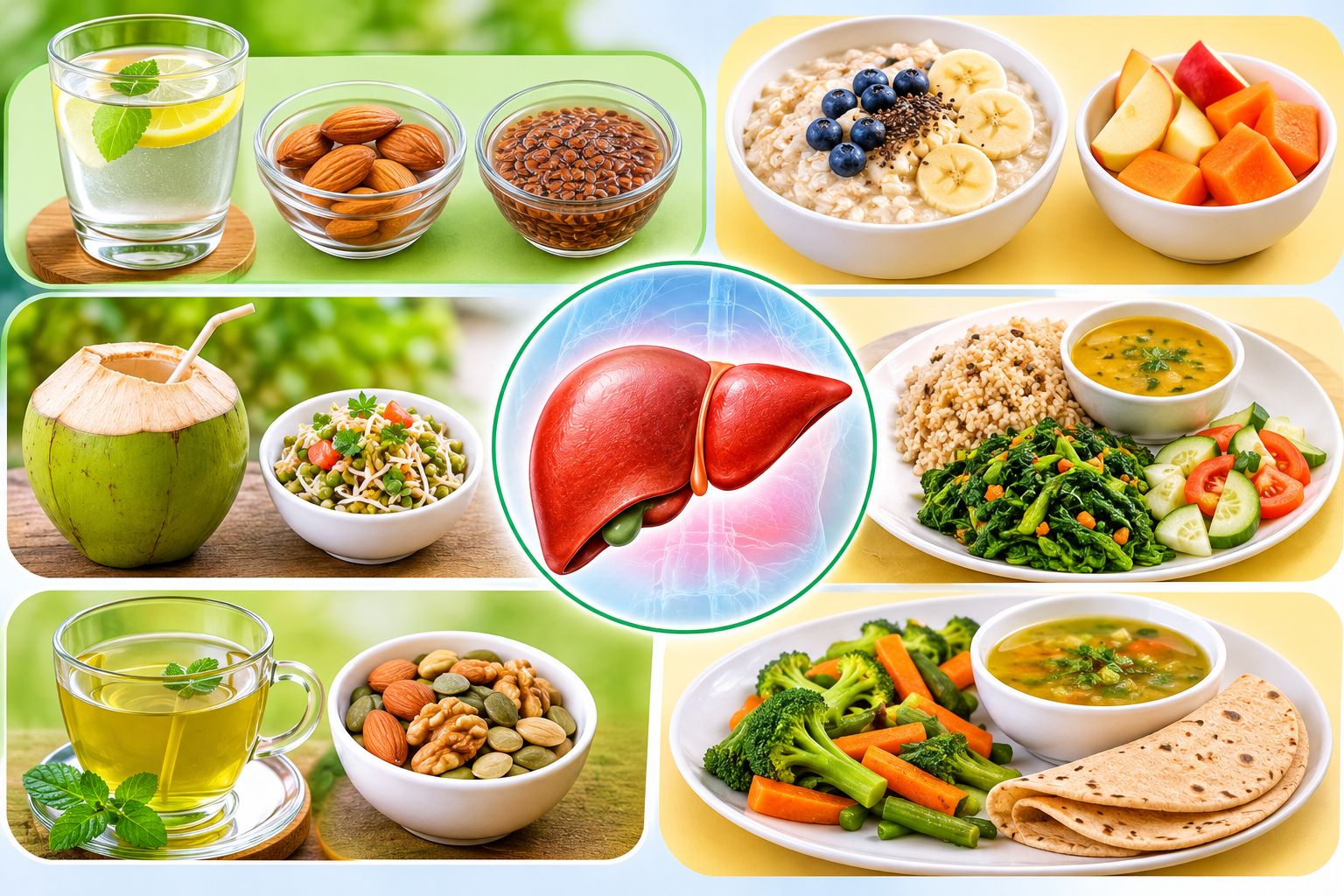
Sample one-day diet chart (vegetarian and non-vegetarian)
| Time | Vegetarian option | Non-vegetarian option |
|---|---|---|
| Early morning | Warm water + 5 soaked almonds or 2 walnuts | Same |
| Breakfast | Vegetable besan chilla or moong dal dosa + 1 bowl curd | 2-egg vegetable omelette + 1 multigrain toast |
| Mid-morning | 1 whole fruit (guava, apple, orange, papaya) or plain buttermilk | Same |
| Lunch | 2 millet or whole-wheat roti + dal + seasonal sabzi + large salad | 2 roti or 1 small bowl rice + chicken curry (less oil) + sabzi + salad |
| Evening | Roasted chana or sprouts chaat + tea/coffee without sugar | Same |
| Dinner (2–3 h before bed) | Paneer or tofu bhurji + sabzi + 1 small roti | Grilled or curry fish + sabzi + 1 small roti |
Daily limits that follow WHO guidance
- Free sugars: under 10% of calories, ideally under 5% (about 6 teaspoons). This includes sugar in chai, honey, jaggery, juices and sweets.
- Fruit and vegetables: at least 400 g a day — roughly 2 bowls of sabzi or salad and 2 whole fruits.
- Salt: under 5 g (one teaspoon) in total. Watch pickles, papad, namkeen and packaged foods.
- Fats: saturated fat under 10% and trans fat under 1% of calories. Measure oil with a spoon, keep ghee small, and avoid vanaspati and reheated frying oil.
- Alcohol: none.
Smart swaps
- White rice → brown/parboiled rice or millets, smaller portion
- Maida bread → multigrain or roti
- Juice → whole fruit
- Namkeen → roasted chana or makhana
Limit or avoid
- Cold drinks, packaged juice, energy drinks
- Mithai, biscuits, bakery items
- Samosa, pakora, puri, bhature
- Processed meats, instant noodles
Unsweetened tea or coffee is fine for most people. Avoid crash or very-low-calorie diets unless supervised. If you have diabetes or kidney disease, have the chart adjusted by your doctor.
08Treatment beyond diet
Short answerAlongside diet, grade 2 treatment includes WHO-level activity (150–300 minutes a week plus strength training twice a week), steady 7–10% weight loss, no alcohol, and good control of diabetes, blood pressure and cholesterol. Medicines are added for related conditions, or for confirmed inflammation with scarring.
Activity
Aim for 150–300 minutes of moderate activity a week, such as brisk walking, cycling or swimming, plus muscle-strengthening on 2 or more days. This follows WHO advice. Break up long periods of sitting. Exercise reduces liver fat even before the scale moves.
Weight
For grade 2, aim for 7–10% weight loss over 6–12 months — about 0.5–1 kg a week at most. At that level, liver inflammation also tends to improve, not only the fat.
Medicines — when they are used
- For diabetes or obesity: your doctor may prefer medicines that also benefit the liver, such as some newer diabetes and weight-loss drugs.
- For confirmed inflammation with moderate or advanced scarring: newer liver-specific medicines are approved in some countries, prescribed only after specialist assessment.
- Avoid: self-started “liver detox” products, high-dose supplements or unlabelled herbal powders — some cause liver injury. Ayurvedic support should be prescribed and monitored by a qualified doctor.
09Can fatty liver grade 2 be cured?
Short answerYes. Fatty liver grade 2 can be cured — reversed — in most people, especially when there is no significant scarring. With 7–10% weight loss, regular exercise and a low-sugar diet, many people see their grade fall within 6–12 months. Even early inflammation can settle with weight loss.
Research from the US National Institutes of Health notes that losing weight can turn fatty liver with inflammation back into simple fatty liver — and that regaining weight can reverse that progress. A realistic re-test plan looks like this:
| When | What to check | What “on track” looks like |
|---|---|---|
| Start | Weight, waist, LFT, HbA1c, lipids, FIB-4 | Baseline recorded |
| 3 months | Weight, waist, LFT, HbA1c | 3–5% weight loss; ALT falling |
| 6 months | Above + ultrasound or FibroScan CAP | Grade or CAP improving |
| 12 months | Full review, FIB-4 again | 7–10% loss; grade 0–1; stable or lower stiffness |
If scarring is already present, it improves more slowly than fat. The goal then is to stop it worsening and to reduce it over time, with specialist follow-up.
Want a personalised grade 2 diet and reversal plan?
Diabetes & metabolic consultation at ₹800 — clinics in Lajpat Nagar 4, Dwarka Sector 9 and DLF Phase 4 Gurugram, plus online consultations across India, Monday to Sunday, 10 am to 8 pm.
Consultation fee only; tests and medicines, if needed, are extra.
10Fatty liver grade 2 care at Dr. Monga Medi Clinic
Short answerDr. Monga Medi Clinic offers a structured fatty liver grade 2 plan. It includes a report review, a FIB-4 scarring check, a WHO-aligned Indian diet chart made for you, diabetes and cholesterol management, and reviews at 3, 6 and 12 months — in clinic or online.
Your grade 2 plan includes
- A review of your ultrasound and blood reports, and a FIB-4 score calculated at your visit
- A FibroScan or specialist referral, if your score is not low
- A personal diet chart based on your food habits — vegetarian, eggetarian or non-vegetarian
- An activity target you can reach, with a plan to build up week by week
- Treatment of diabetes, thyroid or cholesterol if present, with Ayurvedic support where suitable
- Follow-up at 3, 6 and 12 months to check that the numbers are moving
How to get started
- WhatsApp your reports to 70424 24269: ultrasound, LFT, sugar and lipid results.
- Pick a slot at Lajpat Nagar 4, Dwarka Sector 9 or DLF Phase 4 Gurugram, or book an online consultation.
- Get your plan with clear targets for 3 months and your first review date.
Bring with you: your ultrasound and blood reports (old and new), your current medicines and supplements, and a typical day's food — it helps us build a diet chart you will actually follow.
FAQFrequently asked questions
What are the symptoms of fatty liver grade 2?
Most people have none. Some feel tired or unwell, or notice a dull heaviness under the right ribs. Yellow eyes, a swollen belly, vomiting blood or confusion are not grade 2 symptoms and need urgent care.
Is grade 2 fatty liver dangerous?
It is not an emergency, but it should be taken seriously. The main concern is whether inflammation or scarring has begun, so a FIB-4 score — and FibroScan if needed — is advised. Grade 2 also raises the risk of diabetes and heart disease.
What is the best diet chart for fatty liver grade 2?
An Indian diet built on WHO limits: free sugar under 10% of calories (ideally 6 teaspoons a day or less), salt under 5 g, at least 400 g of fruit and vegetables, whole grains and dal, lean protein, measured oil and no alcohol. See the sample chart above.
Can fatty liver grade 2 be cured?
Yes, in most people. Losing 7–10% of body weight, exercising 150–300 minutes a week and following a low-sugar diet can reverse grade 2 within 6–12 months, especially if there is no significant scarring.
How long does it take for grade 2 fatty liver to become normal?
Many people improve to grade 1 or normal in 6–12 months of steady change. Re-testing at 3, 6 and 12 months shows whether you are on track.
Can I eat rice with fatty liver grade 2?
Yes, in a small portion. Prefer brown or parboiled rice or millets, and pair it with dal, vegetables and salad rather than eating rice on its own.
Are fruits allowed in fatty liver grade 2?
Yes. Whole fruits are recommended as part of the 400 g of fruit and vegetables a day. Avoid fruit juices, which count as free sugars under WHO guidance.
Is ghee bad for fatty liver grade 2?
Small amounts are acceptable. WHO advises keeping saturated fat under 10% of calories, so use ghee sparingly and choose measured amounts of vegetable oil for cooking.
How much does a fatty liver grade 2 consultation cost?
A diabetes and metabolic consultation costs ₹800; any tests or medicines are charged separately. You can also book an online consultation from anywhere in India.
Reverse fatty liver grade 2 with a plan you can follow — in clinic or online, 7 days a week.
Diabetes & metabolic consultation at ₹800 — clinics in Lajpat Nagar 4, Dwarka Sector 9 and DLF Phase 4 Gurugram, plus online consultations across India, Monday to Sunday, 10 am to 8 pm.
Consultation fee only; tests and medicines, if needed, are extra.
Medical sources
- EASL–EASD–EASO Clinical Practice Guidelines on the management of MASLD (2024)
- Qualitative steatosis grading by abdominal ultrasound (Quant Imaging Med Surg, 2020)
- Radiopaedia: Diffuse hepatic steatosis grading, including CAP values
- NIDDK (NIH): Symptoms & causes of NAFLD/MASLD
- Mayo Clinic: Fatty liver disease (MASLD) — symptoms and causes
- WHO: Healthy diet — fact sheet
- WHO guidelines on physical activity and sedentary behaviour: at a glance (2020)
- WHO: Guideline on sugars intake for adults and children
- WHO: No level of alcohol consumption is safe for our health (2023)
External links are for further reading and do not replace advice from a qualified health professional.
How this guide was made: written and medically reviewed by the Dr. Monga Medi Clinic medical team. Diet, activity and alcohol advice follows World Health Organization (WHO) guidance. Liver assessment follows the 2024 EASL–EASD–EASO guideline. The sample diet chart is general guidance — your plan should be personalised. We review this page at least once a year. Last reviewed 23 Nov 2026.
This guide is for general information and is not a diagnosis or a prescription. Do not start, stop or change any medicine — including herbal or homeopathic remedies — without speaking to a qualified doctor.