
Quick answer
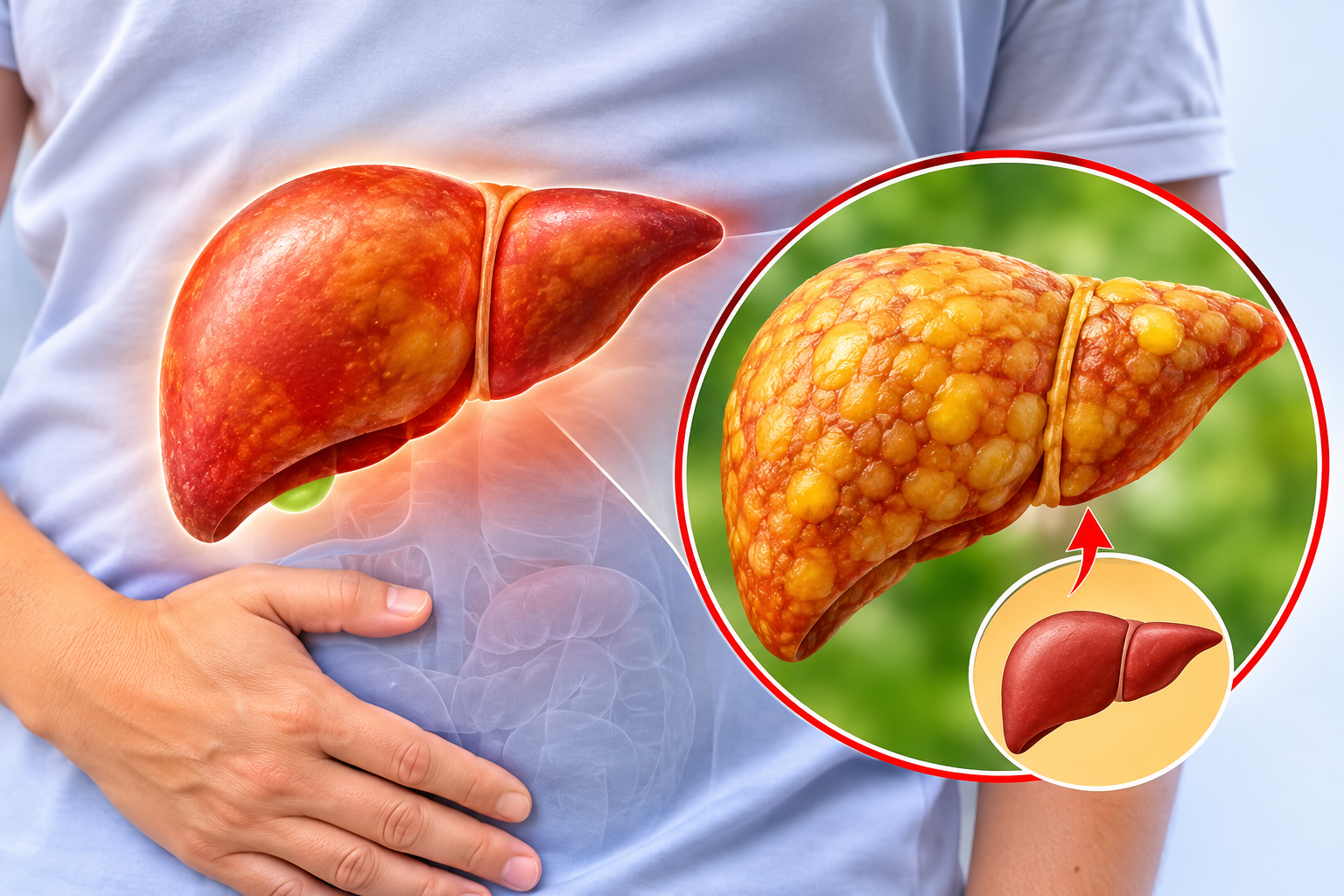
Grade 1 fatty liver means an ultrasound has found a mild build-up of fat in the liver. The liver looks slightly brighter than normal, but its blood vessels and the diaphragm are still clearly seen. It usually causes no symptoms and, in most people, can be reversed. The main steps are 5–10% weight loss (if overweight), the WHO-recommended 150–300 minutes of activity a week, cutting free sugars, and avoiding alcohol. Your sugar, cholesterol and liver-scarring risk should also be checked.
Key takeaways
- Grade 1 = mild fatty liver (mild hepatic steatosis), the lowest of three ultrasound grades.
- Most cases are now called MASLD — fatty liver linked to weight, blood sugar, cholesterol or blood pressure.
- About 1 in 3 Indian adults has fatty liver.
- Treatment follows WHO healthy-living advice: 150–300 min/week activity, free sugars under 10% of calories, salt under 5 g/day, and no alcohol.
- It is usually reversible, often within 3–6 months of steady change.
01What is grade 1 fatty liver?
Short answerGrade 1 fatty liver is the mildest stage of fat build-up in the liver seen on an ultrasound scan. It is also called mild hepatic steatosis or grade I fatty liver. The liver looks slightly brighter than normal, but there is usually no damage yet.
A healthy liver holds only a small amount of fat. When more fat collects inside liver cells than the liver can use or export, the tissue reflects more sound waves. On ultrasound it then looks brighter, or more “echogenic”. Radiologists grade this brightness on a simple scale:
| Ultrasound grade | What the radiologist sees | What it means |
|---|---|---|
| Grade 0 | Normal brightness; diaphragm and vessels clearly seen | No fatty liver |
| Grade 1 (mild) | Slightly increased brightness; diaphragm and vessels still seen normally | Early, usually reversible fat build-up |
| Grade 2 (moderate) | Clearly brighter; vessels and diaphragm slightly blurred | More fat; needs closer follow-up |
| Grade 3 (severe) | Very bright; back of the liver and diaphragm poorly seen | Heavy fat load; full liver assessment needed |
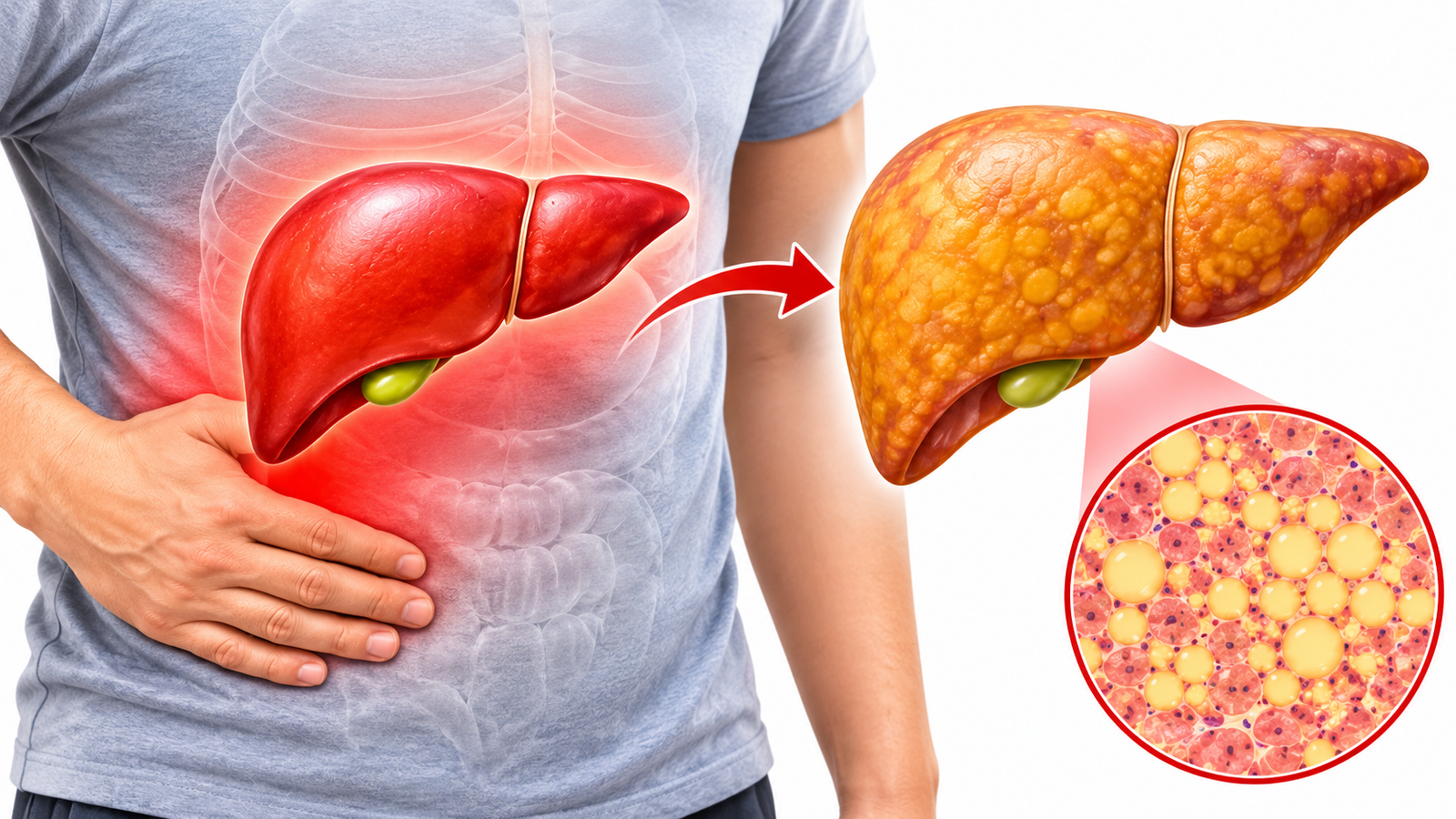
Since 2023, international liver societies have used the name MASLD (metabolic dysfunction-associated steatotic liver disease). It replaced the older term NAFLD. MASLD means fatty liver together with at least one metabolic risk factor and little or no alcohol. Those risk factors include excess weight, high blood sugar, high triglycerides and high blood pressure. So if your report says “grade 1 fatty liver” and you have one of these, it may be described as mild MASLD.
02Grade 1 fatty liver means what on your report?
Short answerOn a report, grade 1 fatty liver means the scan has found mild, early fat in the liver. It does not show whether there is inflammation or scarring, and it is not a sign of liver failure. It is a signal to check your metabolic health.
The word “liver” on a report can cause worry. Here is how to read the common phrases:
- “Grade I fatty infiltration” / “mild hepatic steatosis” — the same as grade 1 fatty liver.
- “Mild hepatomegaly” — the liver is slightly enlarged, which often goes with fatty liver.
- “Echotexture normal, no focal lesion” — reassuring: no lump or growth was seen.
- “Normal LFT” alongside grade 1 — common. Normal liver blood tests do not rule out fatty liver.
A standard ultrasound cannot tell how much scarring (fibrosis) is present. Yet it is fibrosis, not fat, that decides long-term liver risk. Ultrasound can also miss small amounts of fat, so grade 1 may show on one scan and not the next. A FibroScan gives more precise numbers when needed: CAP measures fat and LSM measures stiffness.
03Is grade 1 fatty liver serious?
Short answerGrade 1 fatty liver is not an emergency and usually does no harm to the liver by itself. But it is a warning sign. It often comes with diabetes, high cholesterol and a higher risk of heart disease, and in some people it can slowly get worse if nothing changes.
A national review of Indian studies found that about 38.6% of adults — roughly one in three — have fatty liver. The figure rises to over half in people with obesity or diabetes. Most will never develop serious liver disease. These groups need closer watching:
Higher-risk features
- Type 2 diabetes or prediabetes
- Large waist (central obesity)
- High triglycerides, low HDL
- Any regular alcohol use
Signs to check further
- Persistently raised ALT/AST
- Low platelet count
- High FIB-4 score or liver stiffness
- Family history of cirrhosis
For most people with fatty liver, heart disease is a bigger risk than liver disease. That is why treatment looks after the whole body — sugar, cholesterol, blood pressure and weight — not just the liver.
Not sure what your report means? Share it with our team on WhatsApp.
Diabetes & metabolic consultation at ₹800 — clinics in Lajpat Nagar 4, Dwarka Sector 9 and DLF Phase 4 Gurugram, plus online consultations across India, Monday to Sunday, 10 am to 8 pm.
Consultation fee only; tests and medicines, if needed, are extra.
04What causes grade 1 fatty liver?
Short answerThe most common cause is metabolic. Too many calories, especially from sugar and refined carbohydrates, combine with low activity and insulin resistance. Alcohol, some medicines, thyroid problems and rapid weight changes can also cause it.
- Insulin resistance — the main driver, and common in Indians even at a “normal” weight.
- Belly fat — waist size matters more than body weight.
- Free sugars and refined carbs — sweetened drinks, sweets and maida are turned into liver fat.
- Sitting most of the day, and poor sleep.
- Alcohol — even small amounts add to liver fat.
- Other causes — PCOS, hypothyroidism, steroids and some other medicines, and very rapid weight loss.
Lean fatty liver is common in South Asians. A WHO expert consultation noted that Asian populations face higher health risks at lower BMI levels than Western populations. Many patients at Dr. Monga Medi Clinic have a normal BMI but carry fat around the waist. If that sounds like you, the plan focuses on activity, strength training and food quality, not only weight loss.
05Quick self-check: is your risk low or higher?
Short answerTick the statements that apply to you. Three or more ticks suggest a higher-risk grade 1 fatty liver that deserves a doctor's review. This checklist is a guide, not a diagnosis.
Scored 3 or more? Book a fatty liver risk check.
Diabetes & metabolic consultation at ₹800 — clinics in Lajpat Nagar 4, Dwarka Sector 9 and DLF Phase 4 Gurugram, plus online consultations across India, Monday to Sunday, 10 am to 8 pm.
Consultation fee only; tests and medicines, if needed, are extra.
06Which tests should you do after a grade 1 report?
Short answerAfter a grade 1 fatty liver report, the usual next tests are liver function tests, blood sugar (HbA1c or fasting sugar), a lipid profile and a platelet count. These are used to calculate a FIB-4 score, which estimates scarring risk. A FibroScan is added if the risk is not low.
| Test | Why it matters |
|---|---|
| LFT (ALT, AST, GGT) | Shows liver irritation; normal values do not rule out fatty liver |
| HbA1c / fasting sugar | Finds prediabetes or diabetes — the strongest driver of progression |
| Lipid profile | High triglycerides often go with fatty liver |
| CBC (platelets) | Needed to calculate FIB-4 |
| FIB-4 score | Estimates scarring risk from age, AST, ALT and platelets |
| FibroScan (CAP & LSM) | Measures liver fat and stiffness without a needle, if FIB-4 is not low |
| TSH, hepatitis B & C (as advised) | Rules out other causes |
A liver biopsy is almost never needed for grade 1 fatty liver. Most of these blood tests can be done at the Dr. Monga Medi Clinic diagnostics desk.
07Grade 1 fatty liver treatment: a WHO-aligned plan
Short answerGrade 1 fatty liver treatment is lifestyle-first and follows WHO healthy-living guidance. That means 150–300 minutes of moderate activity a week plus strength training, free sugars under 10% of calories, at least 400 g of fruit and vegetables a day, salt under 5 g, and no alcohol. Add 5–10% weight loss if overweight. Most people do not need liver medicines.
1. Move more — the WHO activity target
WHO advises adults to do 150–300 minutes of moderate activity a week, or 75–150 minutes of vigorous activity. It also advises muscle-strengthening on 2 or more days and less time sitting. European liver guidelines note that this level of activity helps fatty liver even when weight does not change. In practice, that could be:
- a 30–45 minute brisk walk, 5 days a week
- two short strength sessions (squats, wall push-ups, resistance bands)
- standing up and moving for a few minutes every hour you sit
2. Eat the WHO way, Indian style
| WHO healthy-diet advice | What it looks like in an Indian kitchen |
|---|---|
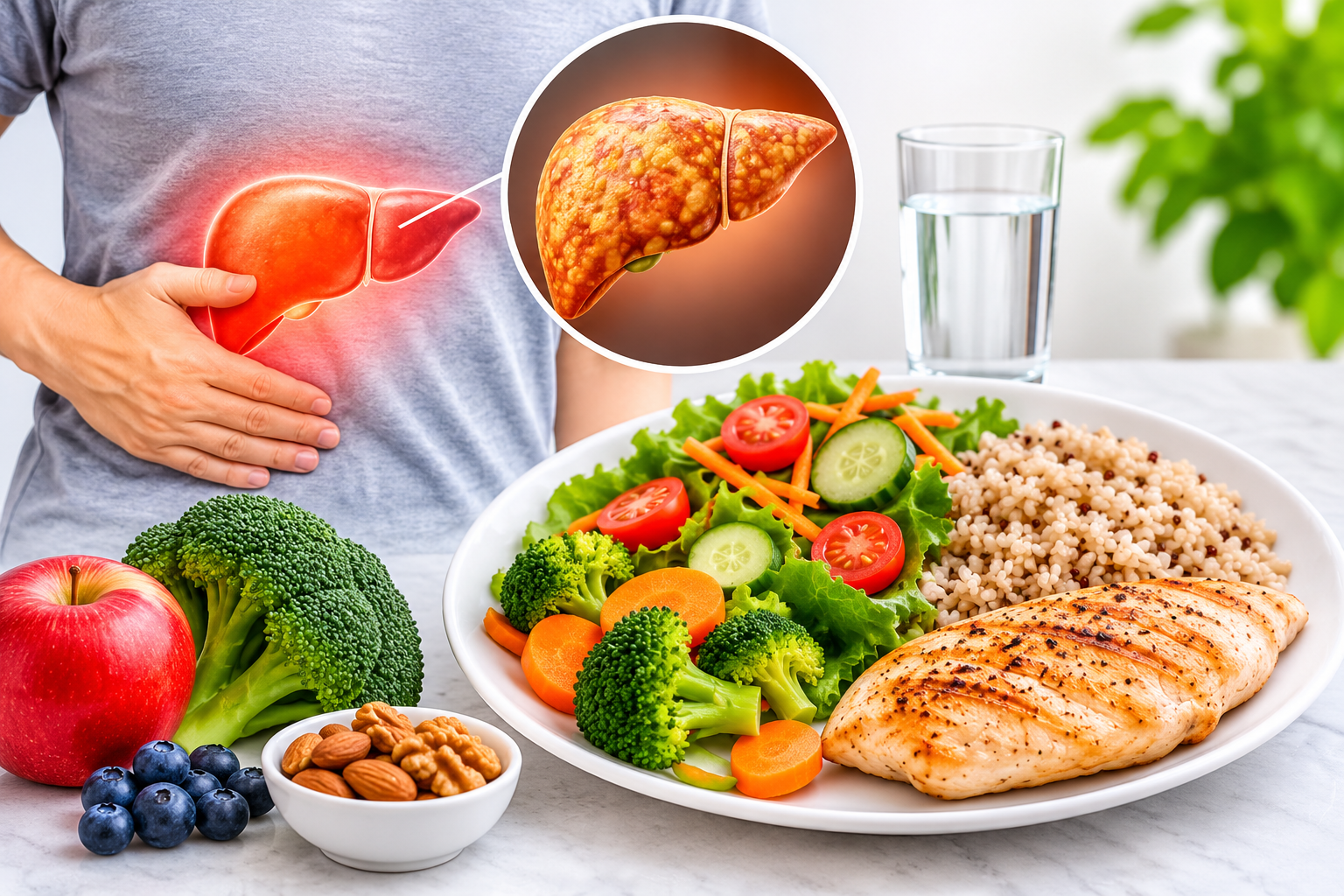
| Free sugars under 10% of daily calories, ideally under 5% | Under about 12 teaspoons a day in total, ideally 6. Stop sugar in chai, and cut out cold drinks, packaged juice, mithai and biscuits. |
| At least 400 g of fruit and vegetables a day | Sabzi at two meals, a salad bowl and 1–2 whole fruits (not juice) |
| Whole grains, legumes and nuts | Millet or whole-wheat roti, brown rice, dal, chana, rajma, a small handful of nuts |
| Salt under 5 g a day | About one teaspoon in total. Go easy on pickles, papad and namkeen. |
| Saturated fat under 10% of calories, trans fat under 1% | Measured cooking oil. Avoid vanaspati and repeatedly reheated frying oil. |
3. Alcohol: none is best
WHO states there is no safe level of alcohol for health. Current liver guidelines also discourage any alcohol for people with fatty liver.
4. Lose weight gradually, if you are overweight
Losing about 5% of body weight lowers liver fat, and 7–10% can also calm inflammation. For an 80 kg person, that is 4–8 kg over several months, at no more than 0.5–1 kg a week. Crash diets can make the liver worse.
5. Control what drives it
Treating diabetes, high cholesterol, thyroid problems and high blood pressure is part of fatty liver treatment. If you have diabetes or obesity, your doctor may choose medicines that also benefit the liver.
What about medicines and “liver tonics”?
No tablet is routinely needed for grade 1 fatty liver. The newer prescription drugs are meant for advanced liver inflammation with significant scarring, not for mild fat. Avoid starting “liver detox” products or high-dose supplements on your own — some can themselves harm the liver. Take Ayurvedic support only under a qualified doctor who monitors your tests.
08Is grade 1 fatty liver curable?
Short answerYes. In most people grade 1 fatty liver is curable — more precisely, reversible. With steady weight loss, regular exercise and diet changes, liver fat often falls within 3–6 months, and the next ultrasound may be normal. It can come back if old habits return.
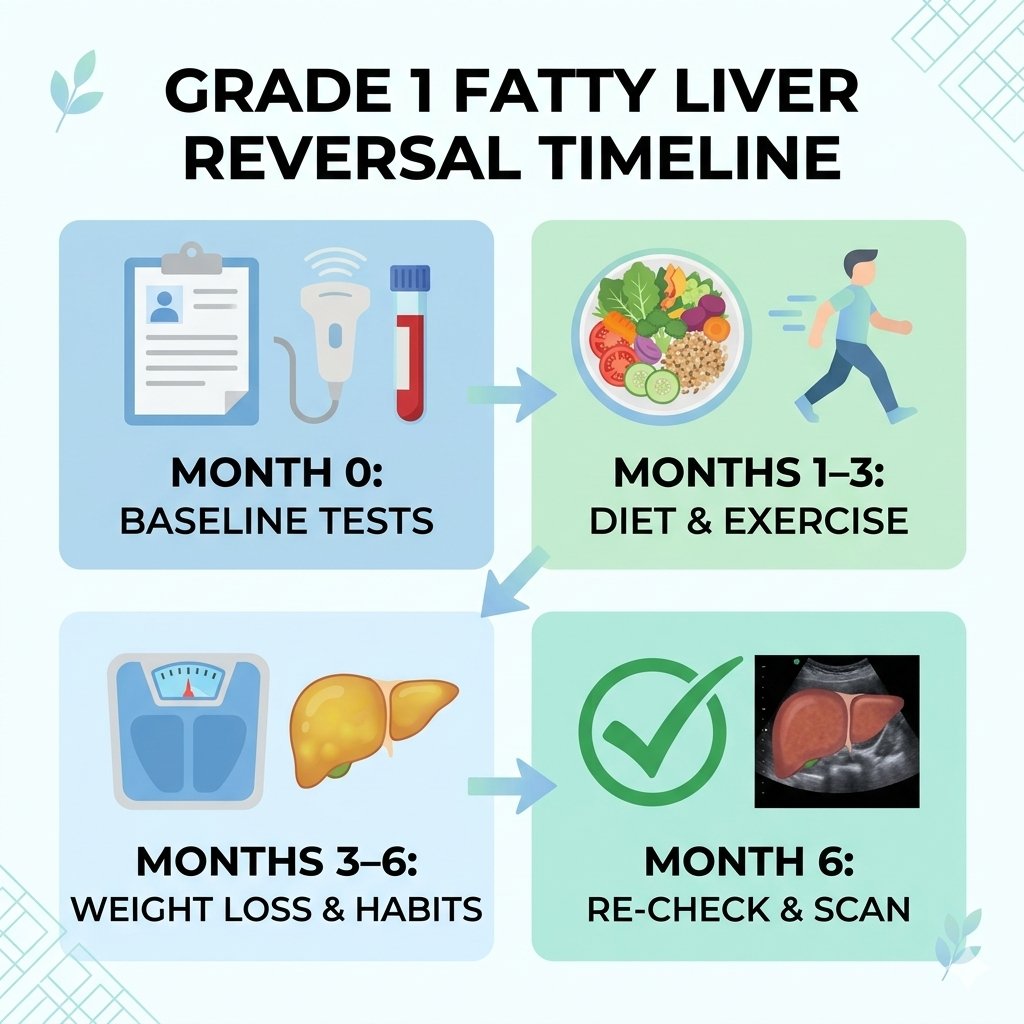
Fat is the part of fatty liver the body clears fastest. At follow-up, what matters is what you measure: weight and waist, liver enzymes, HbA1c and, when helpful, a FibroScan CAP score. An ultrasound is a rough tool for tracking mild fat, so a “normal” scan is good news but not the only goal.
Reversal is slower with continued drinking, untreated diabetes, poor sleep, and fad diets dropped after a few weeks. Treat these changes as a permanent routine, not a short course.
Ready to reverse it? Start your plan with Dr. Monga Medi Clinic.
Diabetes & metabolic consultation at ₹800 — clinics in Lajpat Nagar 4, Dwarka Sector 9 and DLF Phase 4 Gurugram, plus online consultations across India, Monday to Sunday, 10 am to 8 pm.
Consultation fee only; tests and medicines, if needed, are extra.
09Your next step: fatty liver care at Dr. Monga Medi Clinic
Short answerShare your ultrasound and blood reports with Dr. Monga Medi Clinic on WhatsApp or visit one of three clinics in Delhi NCR. You'll get a risk check, a personal Indian diet and activity plan, and a 3-month review, in clinic or online.
What your consultation includes
- A review of your existing ultrasound and blood reports, so you are not tested twice
- A risk check: waist, BP, HbA1c, lipids and FIB-4, with FibroScan advised if needed
- A written plan built on WHO diet and activity guidance and adapted to Indian meals
- Management of diabetes, cholesterol or thyroid if present, with Ayurvedic support where it helps
- A follow-up date at around 3 months to measure progress
Book in three simple steps
- Send your reports — WhatsApp 70424 24269 with your ultrasound and any recent blood tests.
- Choose clinic or online — Lajpat Nagar 4, Dwarka Sector 9, DLF Phase 4 Gurugram, or a video consultation from anywhere in India.
- Start your plan — leave with clear targets and a review date.
Why patients choose Dr. Monga Medi Clinic
What to bring: your ultrasound report, any LFT, sugar and lipid results, a list of your current medicines and supplements, and your recent weight history.
FAQFrequently asked questions
What is grade 1 fatty liver?
Grade 1 fatty liver is mild fat build-up in the liver seen on ultrasound, also called mild hepatic steatosis. It is the earliest of three grades and is usually reversible with lifestyle changes.
What does grade 1 fatty liver mean in an ultrasound report?
It means the liver looks slightly brighter than normal because of extra fat, while its vessels and the diaphragm are still clearly seen. It does not show scarring, so blood tests or a FibroScan may be advised.
Is grade 1 fatty liver curable?
Yes, in most people it is reversible. Losing 5–10% of body weight if overweight, following WHO activity targets, cutting free sugars and avoiding alcohol often clear the extra fat within a few months.
What is the best grade 1 fatty liver treatment?
Lifestyle change in line with WHO guidance: 150–300 minutes of moderate activity a week plus strength training twice a week, free sugars under 10% of calories, at least 400 g of fruit and vegetables daily, salt under 5 g, no alcohol, and control of diabetes, cholesterol and blood pressure.
How long does it take to reverse grade 1 fatty liver?
Many people improve within 3–6 months of steady change. Tests are usually repeated at about 3 months to measure progress.
Do I need medicine for grade 1 fatty liver?
Usually not. No medicine is routinely needed for mild fatty liver. Medicines may be used for related conditions such as diabetes or high cholesterol. Avoid self-starting liver tonics or supplements.
Can thin people have grade 1 fatty liver?
Yes. Lean fatty liver is common in Indians, especially with belly fat or insulin resistance. Activity, strength training and food quality matter even if your weight is normal.
How much does a fatty liver consultation cost at Dr. Monga Medi Clinic?
The diabetes and metabolic consultation is ₹800. Tests and medicines, if needed, are extra.
Can I consult online for grade 1 fatty liver?
Yes. Dr. Monga Medi Clinic offers online consultations across India. Share your reports on WhatsApp at 70424 24269 to book.
Book your fatty liver consultation — in clinic or online, 7 days a week.
Diabetes & metabolic consultation at ₹800 — clinics in Lajpat Nagar 4, Dwarka Sector 9 and DLF Phase 4 Gurugram, plus online consultations across India, Monday to Sunday, 10 am to 8 pm.
Consultation fee only; tests and medicines, if needed, are extra.
Medical sources
- WHO: Healthy diet — fact sheet
- WHO guidelines on physical activity and sedentary behaviour: at a glance (2020)
- WHO: Guideline on sugars intake for adults and children
- WHO/Europe: No level of alcohol consumption is safe for our health (2023)
- WHO expert consultation: appropriate BMI for Asian populations (The Lancet, 2004)
- EASL–EASD–EASO Clinical Practice Guidelines on the management of MASLD (2024)
- Prevalence of NAFLD in India: systematic review and meta-analysis (J Clin Exp Hepatol, 2022)
- Qualitative steatosis grading by abdominal ultrasound (Quant Imaging Med Surg, 2020)
External links are for further reading and do not replace advice from a qualified health professional.
How this guide was made: written and medically reviewed by the Dr. Monga Medi Clinic medical team. Diet, activity and alcohol advice follows World Health Organization (WHO) guidance. Liver-specific advice follows the 2024 EASL–EASD–EASO guideline and Indian research. We review this page at least once a year and whenever major guidance changes. Last reviewed 23 Nov 2026.
This guide is for general information and is not a diagnosis or a prescription. Do not start, stop or change any medicine — including herbal or homeopathic remedies — without speaking to a qualified doctor.