

A height growth specialist in Delhi NCR assesses growth patterns over time, not one measurement. A child’s growth is best understood from measurements over time, family context and health history—not a single height comparison. Bone-age imaging may be considered by a clinician where appropriate. No treatment can promise a particular height.
On this page
- Height growth assessment in Delhi NCR
- Bone age and growth plates
- Children and adults need different conversations
- When to arrange assessment
- Bring measurements from more than one visit
- Puberty timing is part of the picture
- Bone-age imaging has limits
- Who may be involved in assessment?
- Be cautious of guaranteed-height claims
- Set a realistic goal for the appointment
- In-depth guides
- Frequently asked questions
01Height growth assessment in Delhi NCR
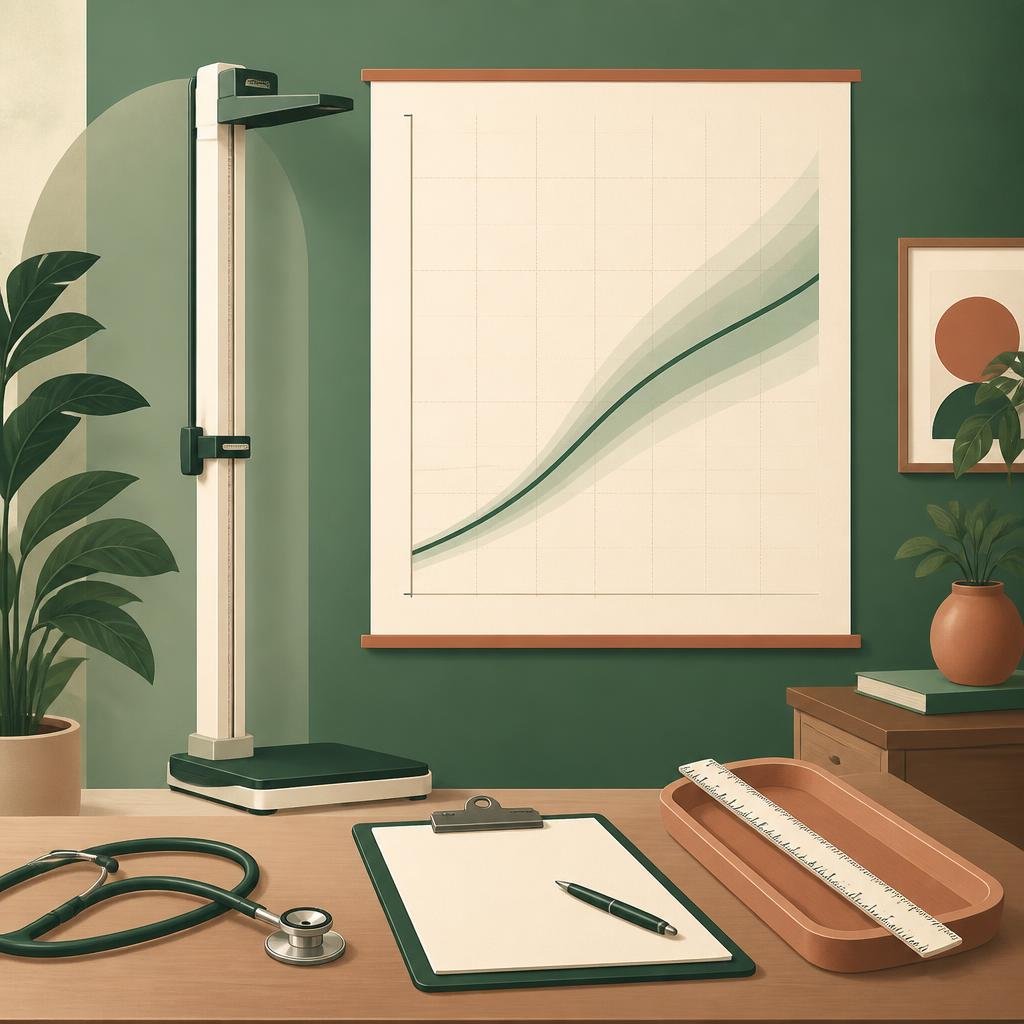
A clinician may review height and weight measurements on a growth chart, growth velocity, puberty timing, family heights and relevant medical history. A one-off measurement cannot establish whether growth is abnormal.
02Bone age and growth plates
A bone-age X-ray of the hand and wrist can help estimate skeletal maturity in selected cases. It does not guarantee future height. Once growth plates have closed, substantial natural height increase is not expected; be cautious of products promising otherwise.
03Children and adults need different conversations
For a child or adolescent, bring prior growth records if available. After 18, evaluation can explain whether any growth potential remains, but no height gain should be promised. Avoid unverified supplements, hormones or exercises marketed for guaranteed growth.
04When to arrange assessment
Consider a clinician review if growth appears to slow, puberty timing raises concern, or a child’s measurements cross growth-chart patterns. The appointment is an assessment, not a guarantee of treatment or outcome.
05Bring measurements from more than one visit
A series of accurate height and weight measurements gives more information than a single reading. Bring dates and records from a school or previous clinic if available. A clinician may plot these on an age- and sex-appropriate growth chart, consider measurement technique and compare the pattern with family and medical history.
06Puberty timing is part of the picture
Growth spurts occur at different times, and puberty timing can affect how a child’s height changes across adolescence. A clinician may ask about development, nutrition, long-term illness and family patterns. If there are concerns about early or delayed puberty, the clinician can decide whether further assessment or referral is appropriate.
07Bone-age imaging has limits
In selected cases, a clinician may request an X-ray of the hand and wrist to estimate skeletal maturity. The result is one piece of information, not a guarantee of adult height and not a reason to start treatment by itself. Ask what decision the test may change, and whether its benefits outweigh the cost and exposure.
08Who may be involved in assessment?
A primary-care clinician or paediatrician can review growth records and identify whether an endocrinology referral is appropriate. The right route depends on age, symptoms, medical history and local service availability. Call to confirm which clinician is available; do not assume a particular specialist or test is offered at every clinic location.
09Be cautious of guaranteed-height claims
No exercise, supplement, massage or medicine should be presented as a guaranteed way to increase height. Adequate nutrition, sleep and general health support wellbeing but do not override growth-plate maturity. Hormones are prescription treatments for specific diagnoses and require specialist assessment and monitoring.
10Set a realistic goal for the appointment
An assessment can explain whether the growth pattern needs follow-up, whether a test is useful and whether referral is warranted. It may not produce a treatment or a precise adult-height prediction. Ask what changes to watch for, when the next measurement should happen and which warning signs should prompt earlier review.
FAQFrequently asked questions
Which doctor should I consult for height growth?
A clinician experienced in growth assessment can review growth records and decide whether additional evaluation or specialist referral is appropriate. See our guide for children and adults.
Can height increase after growth plates close?
Once growth plates have closed, natural long-bone growth is not expected. No clinic can responsibly promise otherwise.
Does everyone need a bone-age test?
No. A clinician decides whether bone-age imaging would add useful information based on the individual assessment.
Can a single height reading diagnose a growth problem?
Usually not. Measurements over time, growth velocity, age, development and clinical history help interpret a child’s pattern.
Does a bone-age X-ray tell a person their exact final height?
No. It estimates skeletal maturity and has limitations. A clinician interprets it alongside growth records and other context.
Can adults increase height after growth plates close?
Natural long-bone growth is not expected after growth plates close. Be cautious of clinics or products promising otherwise.
Which specialist is available at the clinic?
The specific clinician and service availability are not confirmed here. Call 80109 31122 before travelling to ask about the current appointment options.
iMedical sources
External links are for further reading and do not replace advice from a qualified health professional.
This page is general health information, not a diagnosis or personal treatment plan. For emergencies, go to the nearest hospital.
 Growth & development
 Growth & development
 Growth & development